




Vestnik dermatologii i venerologii

Peer-review academic medical journal on dermatology, venereology and cosmetology.
About
The journal founded in 1924 is the oldest journal worldwide in the field of dermatology and venereology.
This is an open-access, peer-review international journal that publishes original papers in efficacy and safety of medicines, the analysis of clinical practice, and its compliance with national and international recommendations.
The journal cater for a wide range of readers comprising clinical and medical practitioners of general and advanced medical and clinical research, academicians, researchers, and students, as well as for the international business circle of people in the field that are establishing new skin-care products.
The journal is specially interested in research related to clinical trials, procedural dermatology, patient-centered care and immunodermatology. Papers on research methodology, health care quality, and improving the delivery of patient care, including systematic reviews and evidence-based guidelines, are also welcomed.
Editor-in-Chief
- Prof. Aleksey A. Kubanov, MD, Dr.Sci. (Med.)
ORCID iD: 0000-0002-7625-0503
Founder & Publisher
- State Research Center of Dermatovenereology and Cosmetology, Ministry of Healthcare of the Russian Federation
- Russian Society for Dermatologists and Cosmetologists
Articles types
- reviews
- systematic reviews and metaanalyses
- original research
- clinical case reports and series
- letters to the editor
- short communications
- clinial practice guidelines
APC, Publication & Distribution
- Bimonthly issues (6 times a year)
- Continuoulsly publications online (Online First)
- Platinum Open Access (no APC)
- Creative Commons Attribution 4.0 International (CC BY 4.0) License
- articles in English & Russian
Indexation
- SCOPUS
- BIOSIS Previews
- Russian Science Citation Index (on WoS)
- CrossRef
- Google Scholar
- Ulrich’s International Periodicals Directory
- Dimensions
Current Issue
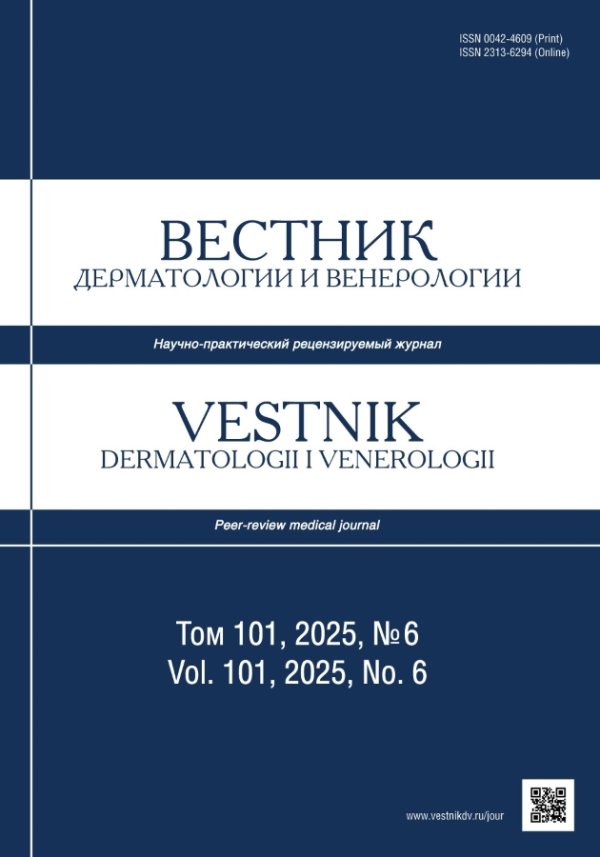
Vol 101, No 6 (2025)
- Year: 2025
- Published: 06.02.2026
- Articles: 10
- URL: https://vestnikdv.ru/jour/issue/view/119
- DOI: https://doi.org/10.25208/vdv.1016
Full Issue

REVIEWS
Artificial intelligence in dermatology: а scoping review
Abstract
Due to the large volume of diverse data regularly received, automation of routine processes in dermatology is a highly relevant task. Artificial intelligence (AI) may provide effective solutions for automating various processes in dermatology. Review Aim: To assess the current state of development and implementation of AI in dermatology and identify key challenges hindering AI integration into clinical practice. A literature search was conducted in PubMed and the Russian Science Citation Index (RSCI) databases, as well as in the Federal Service for Surveillance in Healthcare (Roszdravnadzor) register, to identify registered medical devices incorporating AI. The time frame covered 2019 to 2025. Bibliometric data, research focus, and type of pathology studied, the main methodological characteristics, the diagnostic accuracy of AI and medical staff, the number and experience of medical staff involved, and proven results of AI implementation were extracted from the articles. For the assessment of bias risk, the QUADAS-CAD was used. A total of 41 out of 270 identified references were included in the systematic review. Most studies focused on diagnosing malignant skin neoplasms (65.85%), melanoma (51.22%). In the analyzed studies, AI demonstrated high diagnostic performance comparable to those of experienced medical specialists. Median value (n = 27) for accuracy of neural networks in diagnosing malignant skin neoplasms was 80% (95% CI: 76.55–83.45%). Of the algorithms analyzed, eight have the status of medical devices with AI, and four are mobile applications that can be used to diagnose skin diseases. AI implementation in dermatology is at an advanced stage, with 19.5% of studies analyzed reaching commercial deployment and product distribution levels. However, further research is needed in this area, with improvements in the quality of methodologies used to assess the diagnostic accuracy of AI.
 9-21
9-21


Tacrolimus ointment: summarizing two decades of experience in off-label use. Use in rosacea, seborrheic dermatitis, papulosquamous dermatoses, lupus erythematosus, eczematous dermatoses, alopecia, and other diseases
Abstract
Tacrolimus ointment, which belongs to the class of topical calcineurin inhibitors, is one of the most studied topical preparations in the history of dermatology. It has a pronounced immunosuppressive and anti-inflammatory effect by suppressing the activation of the T-cell immune response. The high selectivity of its mechanism of action, the absence of an atrophogenic effect, and the possibility of use on delicate areas of the skin have ensured sustained interest in the drug among both researchers and clinicians. Although the approved indication is limited to atopic dermatitis, in actual practice, considerable experience has been gained in the off-label use of tacrolimus ointment for a wide range of chronic inflammatory and autoimmune dermatoses. The first part of the review, published earlier, presented information on the history of development and pharmacological characteristics of the drug, as well as summarized data on its efficacy in vitiligo and fibrotic connective tissue diseases. This publication continues to systematize the available evidence base and focuses on analyzing the clinical experience of using tacrolimus in other nosologies. This part of the review examines the results of using tacrolimus ointment for rosacea, perioral and seborrheic dermatitis, papulosquamous dermatoses (including psoriasis and lichen planus), as well as for skin manifestations of lupus erythematosus. In addition, data are presented on the use of tacrolimus in various forms of eczematous dermatoses not associated with atopy, as well as in alopecia and a number of other less common skin diseases. Analysis of published clinical trials and observational series indicates the promise of expanding the range of indications for the use of the drug. Systematization of the presented data may contribute to a more informed and rational use of tacrolimus ointment in dermatological practice and sets directions for future research.
22-35
The effectiveness of antifungal drugs in dermatomycosis: a systematic review with network analysis
Abstract
Dermatomycosis has a significant impact on the quality of life of patients of any age in all socio-economic regions and requires therapy.
Aim of the review — to compare the effectiveness of topical therapy of dermatomycosis with amorolfine, azole (clotrimazole, ketoconazole) and allylamine (terbinafine, naftifine) groups using a systematic review of randomized clinical trials and synthesis of its results based on a network meta-analysis.
The review includes non-placebo-controlled randomized trials of the efficacy of amorolfine, clotrimazole, ketoconazole, terbinafine, and naftifine with a therapy duration of up to four weeks. The percentage of patients who achieved a mycological and clinical cure was chosen as the endpoint of effectiveness. The assessment of the effect size in the analysis is represented by the risk difference. The drugs in question are ranked based on surface under the cumulative ranking curve (SUCRA).
The data from 7 studies involving about 769 patients with dermatomycosis were statistically analyzed. The results showed almost equivalent efficacy of amorolfine and terbinafine, superior to ketoconazole, and clotrimazole in cream formulations. Ranking the effectiveness of drugs using SUCRA revealed amorolfine as the most effective therapy among other drugs.
The analysis of the study results included in the systematic review showed the advantage of amorolfine in the formulation of cream over terbinafine, ketoconazole, clotrimazole, naftifine.
36-45
Hypertrophic scars: modern concepts of prevention and treatment
Abstract
Despite a large number of studies, the problem of impaired wound healing, in particular hypertrophic scars, remains relevant. Currently, there is no “gold” standard for the management of patients with hypertrophic scars. The purpose of this work was to analyze modern methods of prevention and treatment of hypertrophic scars, in terms of pathogenetic aspects, advantages and disadvantages. The review article includes systematic reviews, original research, and clinical cases describing the prevention and treatment of hypertrophic scars. The search was conducted for the key terms “hypertrophic scar”, “scar-free healing”, “therapeutic strategic”, and “wound healing” in the bibliographic databases PubMed, Scopus, and eLibrary. Articles with the highest citation index were selected from the data obtained. A total of 3,861 titles, 1,484 full articles were reviewed, and 139 articles are included in this review. An analysis of numerous scientific papers has provided a deep understanding of modern strategies for the prevention and treatment of hypertrophic scars. In this article, all the presented methods can be divided into 2 groups: methods that directly affect the blocking of extracellular matrix overproduction and methods that improve regeneration, including tissues around the wound. The latter, according to a few authors, are a promising area of wound healing, as they reduce the overall healing time, thereby contributing to a noticeable aesthetic improvement in the appearance of scars.
46-59
ORIGINAL STUDIES
Significant dermoscopic patterns of mycosis fungoides
Abstract
Background. Dermoscopy is a fast, non-invasive diagnostic method widely used in routine clinical practice to assess skin neoplasms. Recently, more and more data have been accumulated describing specific dermoscopic signs of various skin diseases, including mycosis fungoides. The possibility of using dermoscopy in patients with mycosis fungoides can significantly facilitate differential diagnostics with inflammatory dermatoses, reducing the time for establishing a diagnosis and prescribing an effective therapy, which will lead to an increase in the quality and duration of life of such patients.
Aim. To describe the dermoscopic patterns of mycosis fungoides at early stages (IA, IB, IIA) and compare it with the dermoscopic patterns in plaque psoriasis.
Methods. An open-label, prospective study was conducted, which included 17 patients with early mycosis fungoides and 28 patients with plaque psoriasis. The diagnosis was confirmed in all patients by pathohistological investigation. Immunohistochemical methods were additionally used for mycosis fungoides. Dermoscopy was performed using a polarized manual dermoscope (HEINE DELTA 20Т). The dermoscopic patterns were assessed: the location and morphology of vessels, the presence of scales and other structural elements.
Results. The following dermoscopy patterns were statistically significantly more often determined in patients with mycosis fungoides: small, short, linear vessels and a vascular structures resembling spermatozoa (p < 0.001), as well as orange-yellowish patchy areas (p < 0.001).
Conclusion. Detection of specific dermoscopy patterns at the early stages of mycosis fungoides will allow to use dermoscopy in the differential diagnosis of the disease with various inflammatory dermatoses in clinical practice.
60-67
Syphilis treatment outcomes in HIV-coinfected patients: a retrospective study
Abstract
Background. The efficacy of antibiotic therapies used to treat syphilis in HIV-positive patients has not been sufficiently studied. In patients with coinfection, seronegativization of non-treponemal tests after syphilis therapy is often delayed, however, data on the reasons for the delayed serological response are limited and contradictory.
Aim. To assess the frequency of syphilis treatment failure in HIV-positive patients and to identify factors affecting the development of serological resistance (SR).
Methods. A post-hoc analysis of clinical, serological, liquorological and immunological data of 280 HIV-positive patients with syphilis who were under follow-up at St. Petersburg AIDS and Infectious Diseases Center has been conducted.
Results. Syphilis treatment failure was observed in 44.1% of patients with coinfection. The risk of SR was higher in women (p = 0.002), in elder patients (p = 0.006), in those with a more advanced HIV infection (p = 0.017) and depended on the duration of syphilis before the treatment initiation (p < 0.001). SR occurred more commonly after therapy for latent (p = 0.001), late syphilis (p < 0.001), neurosyphilis (p = 0.014), and reinfections (p = 0.027). The lack of positive dynamics in microprecipitation reaction (MPR) with serum was mainly observed when the recommended treatment methods were not adhered to and when the therapy prescribed was insufficient for the relevant stage and form of syphilis (р = 0,012). The CD4+ T-lymphocyte count < 350/μL increased the risk of SR 2.1-fold (p = 0.008). The occurrence of SR was not associated with ART, HIV RNA level (viral load), or pre-treatment MPR titer. Excessive doses of antibiotics during the initial treatment and additional therapy during the period of clinical and serological observation did not have a positive effect on the serological response.
Conclusion. Due to the high frequency of syphilis treatment failure, HIV-infected patients require a careful choice of the initial treatment regimen combined with regular and prolonged clinical and serological follow-up.
68-83
GUIDELINES FOR PRACTITIONERS
Treatment of hypertrophic resistant port-wine stains with copper vapor laser radiation (578 nm)
Abstract
Port-wine stains are congenital vascular malformations characterized by dilated capillaries in the papillary dermis. Port-wine stains typically appear at birth and tend to become darker and thicker with age. Laser treatments for port-wine stains have proven effective. However, less than 10% of patients are completely cured by pulsed dye laser treatment, and 16–50% relapse after pulsed dye laser treatment. The aim of the study is to evaluate the efficacy of treatment of hypertrophic resistant port-wine stains with variable pulse copper vapor laser radiation at a yellow wavelength of 578 nm. A series of four clinical cases of diagnosed hypertrophic resistant port-wine stains is presented and issues of treatment thereof with the copper vapor laser at a yellow wavelength of 578 nm are discussed. The port-wine stains were treated at the following copper vapor laser settings: an average power of 0.6–0.8 W; an exposure time of 0.2–0.9 s; the light spot diameter was 1 mm. The treatment was carried out in 2–6 sessions with a 2-month interval. A good cosmetic effect was achieved without formation of scars and without relapses during the two-year follow-up period after treatment.
84-94
Clinical case of cutaneous vasculopathy due to mutation of prothrombin gene F2(20210)GA
Abstract
The article describes a case of skin vasculopathy due to systemic coagulopathy. In the setting of complete well-being, a 37-year-old female patient developed extensive areas of skin necrosis, predominantly in the lower extremities, over a period of 3 months. At the initial visit to the dermatovenerologic dispensary, papulonecrotic vasculitis was diagnosed, and systemic therapy with glucocorticosteroids was prescribed, which turned out to be ineffective. A repeated histological examination carried out at the Skin and Venereal Diseases Clinic of the Military Medical Academy allowed to make a final diagnosis — occlusive vasculopathy. When evaluating the coagulogram, the patient was found to have elevated prothrombin level (165 %) and a slight decrease in aPTT (22.3 s). Considering the normal platelet count, absence of concomitant visceral pathology, lack of history of warfarin use, and past infections, the patient’s condition was regarded as a manifestation of systemic coagulopathy. A search for possible causes of hypercoagulation revealed a significant mutation in the prothrombin gene F2(20210)GA. Anticoagulant therapy was initiated after consultation with a hematologist. Taking into account the large area of ulcerative skin defects, the patient was transferred to a surgical inpatient facility for further treatment. Thanks to the joint work of specialists in Dermatology, Hematology, and Surgery, it was possible to achieve healing of skin defects without plastic surgery, as well as to prevent repeated thrombotic events (no relapses during 6 months of follow-up).
95-102
CLINICAL CASE REPORTS
Diagnosis and therapy of onychomycosis caused by Trichophyton Schoenleinii and yeast-like fungi of the Candida genus
Abstract
The article describes a clinical case of diagnosis and treatment of onychomycosis caused by combined flora — the causative agent of favus Trichophyton schoenleinii and yeast-like fungi of the Candida genus. An 85-year-old female patient was examined, who was under observation for 14 days in the 24-hour inpatient department of the State Budgetary Healthcare Institution of Bashkortostan “Republican Skin and Venereal Diseases Dispensary” in Ufa. Complaints and medical history were collected, physical examination, microscopic examination and microbiological culture of pathological material, systemic and topical treatment were performed. As a result, microscopy done twice revealed mycelium and yeast-like cells, and culture results revealed T. schoenleinii. The treatment resulted in regression of clinical manifestations. In this case, the clinical picture was characterized by a prolonged, subtle disease course, a combination of two pathogens, and a slow response to therapy. Patients’ comorbidity, elderly age, and subtle clinical symptoms are important factors of prolonged onychomycosis, multiple lesions of the nail plates, and the need for longer and combined treatment.
103-109
Development of amyloid lichen in a patient with atopic dermatitis
Abstract
The article considers a case of cutaneous amyloidosis that occurred in the setting of atopic dermatitis in a 32-year-old female patient. The patient has suffered from atopic dermatitis since the first months of her life, and homeopathic preparations have been used for treatment. Treatment with conventional medications and physiotherapy at the age of 20 years old resulted in a long-term remission, however, the patient noticed skin thickening in the areas of former rashes. Pathological examination of skin biopsy material and histochemical examination (hematoxylin and eosin, Van Gieson, toluidine blue, Congo red staining, PAS reaction) allowed to diagnose amyloid lichen. Amyloid lichen is a rare and severe complication of atopic dermatitis. Its incidence in patients with atopic dermatitis is approximately 0.8%. Contemporary methods of treating patients with atopic dermatitis accompanied by cutaneous amyloidosis are discussed. Topical products aimed at relieving inflammation and itching are used for initial treatment of amyloid lichen. Surgical treatments, as well as laser and phototherapy, may be used. Systemic medications (antihistamines, acitretin, cyclophosphamide and cyclosporine, upadacitinib, baricitinib) are an effective treatment option. Successful use of biological agents (dupilumab) has been reported.
110-117
 СМИ зарегистрировано Федеральной службой по надзору в сфере связи, информационных технологий и массовых коммуникаций (Роскомнадзор).
 Регистрационный номер и дата принятия решения о регистрации СМИ: серия ПИ № ФС 77 - 60448 от 30.12.2014.